
VehiclesRC4WD Trail Finder 2 LWB Builders Kit

RC4WD Trail Finder 2 LWB Builders Kit
1/10 scale · crawler · Z-K0065
Specs- Final drive
- 31.90:1
Sold without a motor, so there is no stock KV: compare gearing by rollout.
Background
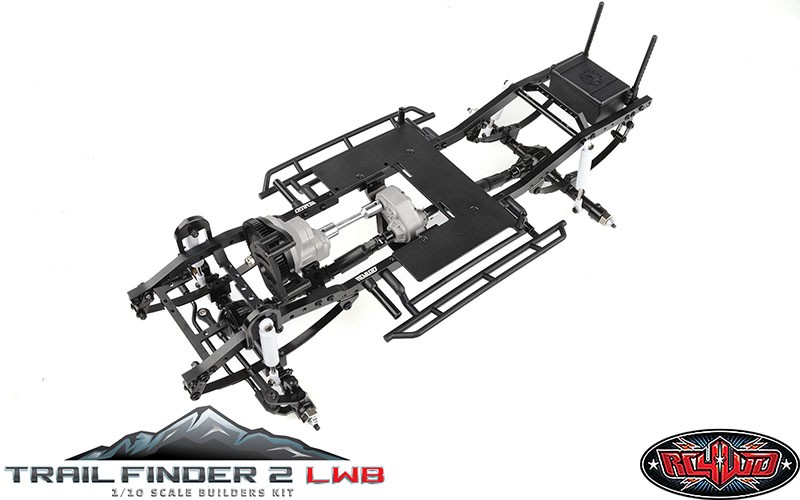
The Trail Finder 2 LWB builder kit uses a billet aluminum ladder chassis, soft steel leaf springs and K44 cast axles with front XVD shafts. An R3 single speed transmission drives the Hammer transfer case, while internally sprung scale shocks support the suspension. The bodyless chassis includes Marlin Crawler side sliders and a molded fuel cell electronics box. The builder selects a compatible long wheelbase body, wheels, tires and electronics. 1
Specifications
Last modified
17 specifications across 6 groups, covering stock setup, dimensions and components.
| Spec | Value | Basis |
|---|---|---|
| Vehicle | ||
| ||
| Class | Crawler | |
| Drive | 4WD | |
| Power | Motor not included | |
| Build | Kit | |
| Scale | 1/10 | |
| Part number | Z-K0065 | |
| Drivetrain | ||
| ||
| Pinion | 14TStock | Stock |
| Spur | 64TStock | Stock |
| Transmission & axle | 6.99:1Derived | Derived |
| Final drive | 31.90:1Stock | Stock |
| Wheels & tires | ||
| ||
| Tire diameter | Not applicable | |
| Power | ||
| ||
| Motor | Not applicable | |
| Battery | Not applicable | |
| Performance | ||
| ||
| Theoretical top speed | Not applicable | |
| Size & weight | ||
| ||
| Width | 193 mm7.6 inStock | Stock |
| Height | 118 mm4.6 inStock | Stock |
| Wheelbase | 314 mm12.4 inStock | Stock |
How to read these figures
- Stock is as the vehicle ships.
- Calculated is worked from the stock figures on this page rather than stored beside them, so the two cannot drift apart.
- Derived is worked out from gear tooth counts the maker publishes rather than printed as a ratio; the notes below say how.
- Not applicable means the vehicle does not come with it, like the motor on a roller or the tires on a race kit.
Pinion × spur map
Alternate fitment unverifiedStock 14T pinion / 64T spur Internal ratio 6.99:1 fixed
Read moreShow less
Catalog stock FDR: 31.90:1. The grid uses the listed tooth counts and internal ratio, so rounding or source differences may change the result slightly.
| Pinion | 62T spur | 64T spur | 66T spur |
|---|---|---|---|
| 12T | |||
| 13T | |||
| 14T | |||
| 15T | |||
| 16T | |||
| 17T |
Select a pair to compare wheel travel per motor turn with stock. Other cells are mathematical examples, not verified gears or fits. Check pitch, mesh, clearance and motor temperature before changing parts.
About these specs
Complete reduction after spur is derived from this exact product page's transmission, transfer case and axle stages.
Read moreShow less
- Published dimensions describe the chassis without body or tires.
- No tire diameter is applicable until the builder selects a tire.
Sources
1 source link for this model.
Individual part and electronics specifications.
Read moreShow less
- Individual part and electronics specifications.
Links open in a new tab.
Parts and electronics
1- Trail Finder 2 LWB Builders Kit product information (opens in a new tab)Supports 2 specifications · Background 1RC4WDUsed forMain specsSizeBackground 1
Related vehicles
No reviewed relation is recorded for this exact model yet.
More from RC4WD
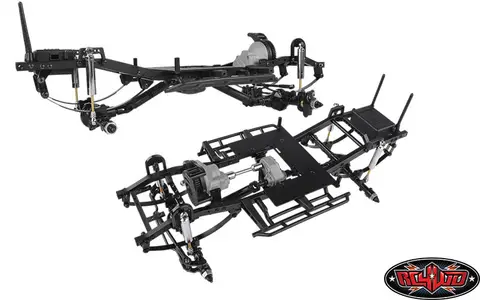 Trail Finder 2 Builders Kit (K44)1/10 · Crawler
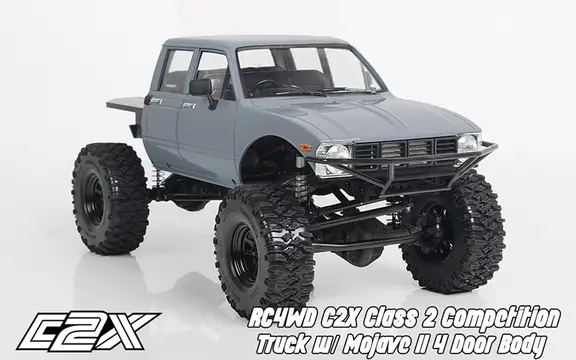 C2X Class 2 Competition Truck RTR1/10 · Crawler
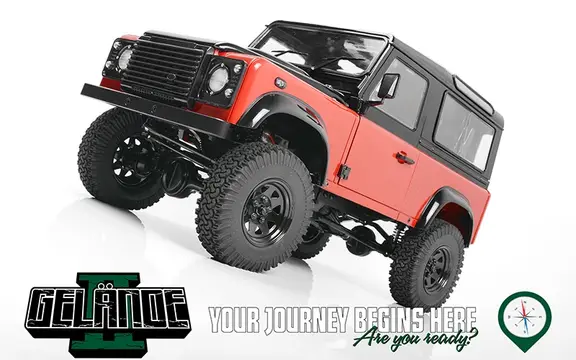 Gelande II RTR 2015 Land Rover Defender D901/10 · Crawler
Browse 7 more RC4WD models.
Read moreShow less
- Trail Finder 2 Builders Kit (K44)1/10 · Z-K0074
- C2X Class 2 Competition Truck RTR1/10 · Z-RTR0042
- Gelande II RTR 2015 Land Rover Defender D901/10 · Z-RTR0043
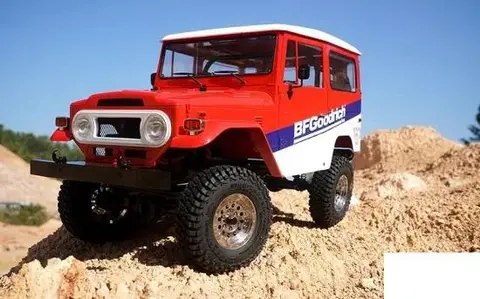 Gelande II RTR Cruiser1/10 · Z-RTR0102
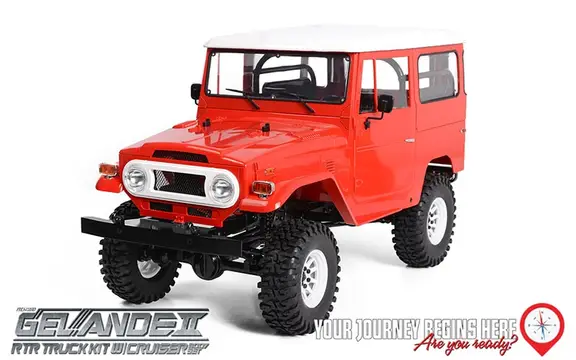 Gelande II RTR Cruiser (Red, Tomahawk tires)1/10 · Z-RTR0047
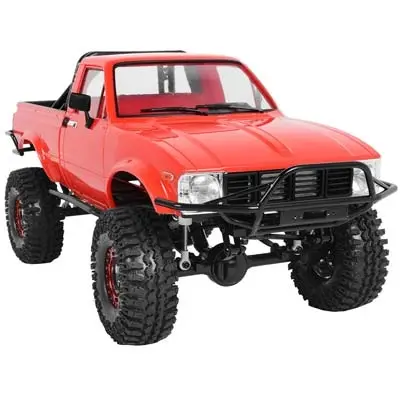 Marlin Crawler Trail Finder 2 RTR1/10 · Z-RTR0034
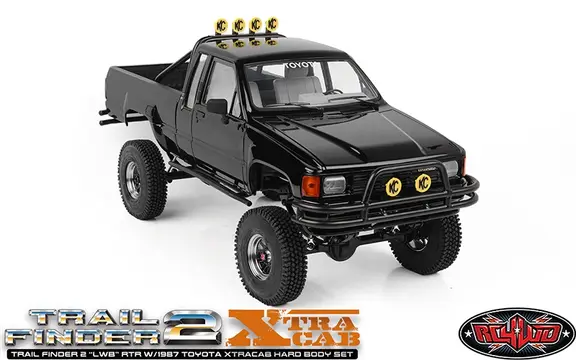 Trail Finder 2 LWB RTR 1987 Toyota XtraCab1/10 · Z-RTR0057
- All RC4WD vehicles