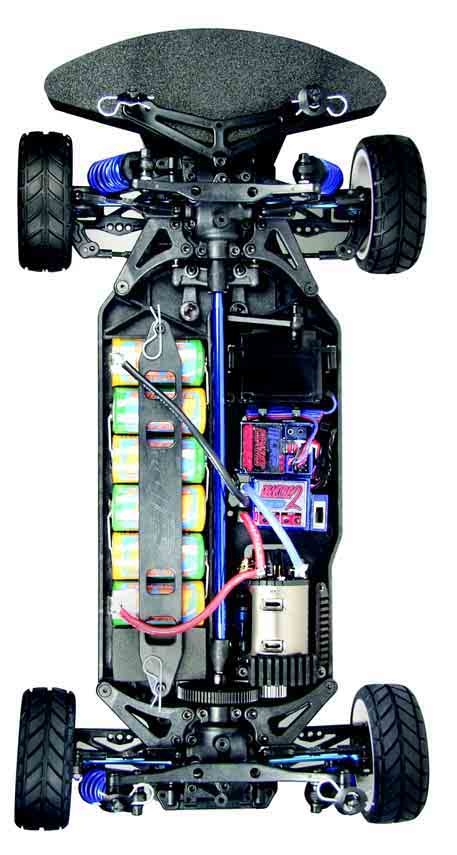
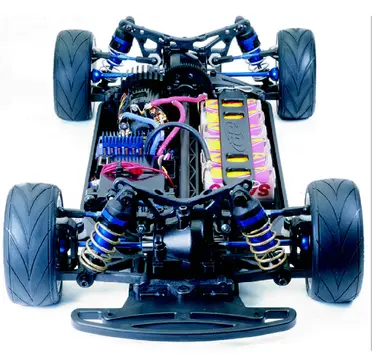
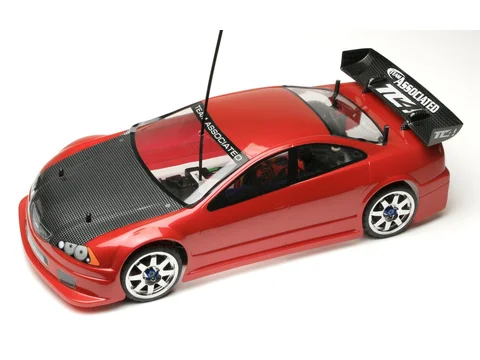
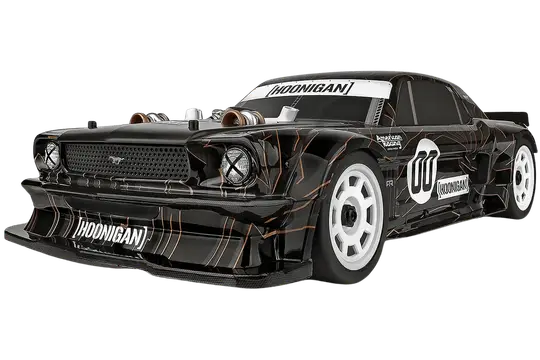
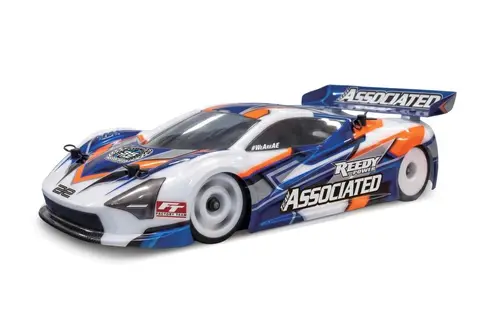
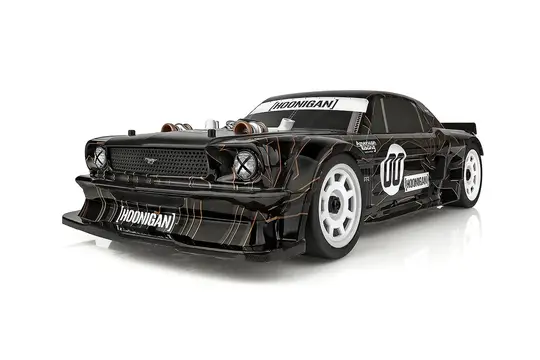
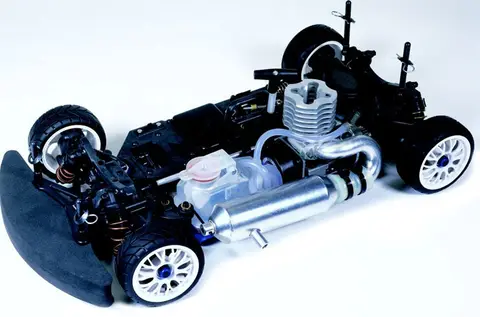
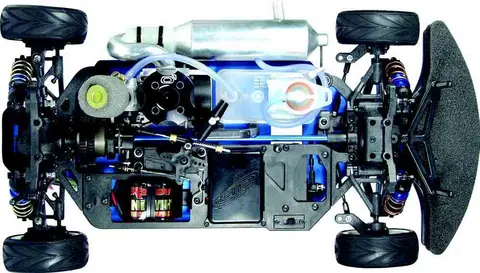
The TC4 refined the TC3’s shaft-drive touring layout with a narrower chassis, revised steering system, stronger drivetrain components and an adjustable aluminum motor mount. The 30100 Team kit included threaded aluminum VCS Macro dampers, heavy-duty MIP CVD driveshafts, bearings and treaded tires on racing wheels. Period factory material (opens in a new tab)
Read moreShow less
The factory instructions cover both the Team kit and the 30110 RTR, with separate equipment lists. They give the chassis a 259mm wheelbase and a 2.50:1 internal ratio. For replacement parts or setup, follow the correct kit branch and check the installed drive cups, shafts and steering hardware. The Team car’s motor, controller, body and pinion are separate build choices. Factory instructions (opens in a new tab)
The kind of vehicle the maker sells it as. It sets what the car is built to do and which cars it is fair to compare it with.
Touring cars are 4WD on-road cars for asphalt and carpet tracks, often raced in classes with fixed motor and battery rules.
Drive
All four wheels are driven, which puts power down more evenly and keeps the car steadier accelerating out of corners.
The cost is more parts to maintain.
Power
Sold without a motor, so you choose the motor, ESC and battery yourself.
Rows that depend on the motor say so.
Build
A kit you build yourself from parts.
Most kits come without motor, ESC, servo, radio and battery, and many without tires or a painted body.
The manual lists what to add.
Scale
The maker's nominal size compared with a full-size vehicle. It works more as a class label than a measurement.
A 1/10 monster truck is far bigger than a 1/10 touring car, so compare length and weight for real size.
This one is 373 mm long.
Part number
The maker's product number for this exact version.
A V2, a new color, or a kit instead of an RTR usually has a different number, and parts can differ between them.
Check it against your box or receipt before ordering parts.
Class
Touring
Drive
4WD
Power
Motor not included
Build
Kit
Scale
1/10
Part number
30100
Drivetrain
Pinion
The small gear on the motor shaft. Fewer teeth gear the car shorter: quicker acceleration, lower top speed and a cooler motor. More teeth do the opposite.
It depends on the motor you fit, so the maker does not list one.
Spur
The large gear the pinion drives. A bigger spur with the same pinion gears the car shorter.
Pinion and spur must have the same pitch, or tooth size, to mesh.
The Gearing parts table below shows this car's pitch and part numbers.
Transmission & axle
Every reduction after the spur, multiplied together: transmission, differentials and axle gears.
It is fixed by the design; the gearing you change is the pinion and spur.
Final drive
How many times the motor turns for one turn of the wheels. A higher number is shorter gearing: more acceleration and pulling power, less top speed.
On-road racers often compare gearing by rollout instead, because tire sizes differ between cars.
Differentials
The type of each differential, as the maker states it.
A gear or ball diff lets the wheels on one axle turn at different speeds in a corner; a spool or locked diff turns them together for straight-line drive and climbing, at the cost of steering.
Spur pitch
The tooth spacing of the fitted gear, stated as metric module or diametral pitch.
The meshing pinion and spur need matching pitch. A missing pitch can be inferred from the other fitted gear; module and diametral pitch are not silently converted.
The outside diameter of the mounted tire, tread to tread. A taller tire covers more ground each turn, which gears the car taller.
Race tires wear down over a day, and a smaller tire gears the car shorter.
Tire diameter
Not published
Suspension
Shocks
What the shocks are and how they are built, as the maker describes them.
Oil-filled shocks damp with silicone oil; friction shocks, found on some entry-level cars, damp with a sprung plunger and cannot be tuned with oil.
Threaded bodies set ride height with a collar you turn, rather than clips.
Shock bore
The inside diameter of the shock body, where the piston moves through oil.
It is a shock measurement, separate from the motor pinion bore. Match the actual shock part when ordering pistons, seals or a replacement body.
This is a nominal size inferred from the identified replacement components. It is not a measured internal diameter; confirm the exact body, piston and seal part numbers.
Spring
The stock springs, in the maker's own wording: a color, a rate or a length.
A stiffer spring holds the car up and resists bottoming out; a softer one lets it squat and follow rough ground.
Rates are not comparable across makers unless they state the same unit.
Shock oil
The oil in the shocks slows how fast the suspension moves. Thicker oil settles the car more slowly and resists bottoming out; thinner oil lets the wheels follow bumps.
Front and rear run the same oil on this car, so both ends respond alike. Changing one end at a time is the usual way to shift the balance.
It is graded in wt here. A wt number is the oil maker's own grade and differs between brands, so match the brand, or use the oil maker's chart to convert.
Shocks
Oil-filledthreaded, aluminum body, front and rearStockSources(1)
10.2mm, front and rear; Nominal 0.4 in maker bore family inferred through the original 6465 piston; not a measured body inside diameter.Derived from replacement partSources(2)
Calculated is worked from the stock figures on this page rather than stored beside them, so the two cannot drift apart.
Derived from replacement part uses the listed dimensions of a replacement advertised for the identified OEM part. Treat it as an approximate working size; the factory-fitted part may differ. Calculated performance uses that approximation.
Not applicable means the vehicle does not come with it, like the motor on a roller or the tires on a race kit.
Not published means it exists but no source we could find prints it.
Build and setup
Factory setup guide for this configuration.
Establish smooth drivetrain movement and consistent ride height before changing the suspension arm mounts. Use the Team branch for the heavy-duty CVD shafts and threaded dampers; the shared RTR instructions show different equipment. The 2.50:1 internal ratio belongs in the gearing calculation, while the pinion depends on the chosen motor. Keep an example motor setup separate from a claim about a universally supplied pinion.[1] TC4 Team Kit factory assembly material (opens in a new tab)
Maker sections are shown where recorded; remaining parts use category headings. Each part appears once. PDF page jumps depend on the viewer.
252 collected part numbers. Collected . Unmarked parts are recorded listings, without a claim about factory installation; optional and upgrade listings are tagged. Key assemblies include recorded gear and shock identifiers. Open a part for its listing sources.
About these specs
Original configuration; identify the fitted tires, gearing and electronics on a restored car. Period battery-cell references do not establish a modern LiPo rating.
Common numbers cover selected core components, not every part. A shared family, manual or listing does not mean the parts fit both vehicles. Check the comparison and upgrade notes before ordering.