- Chassis
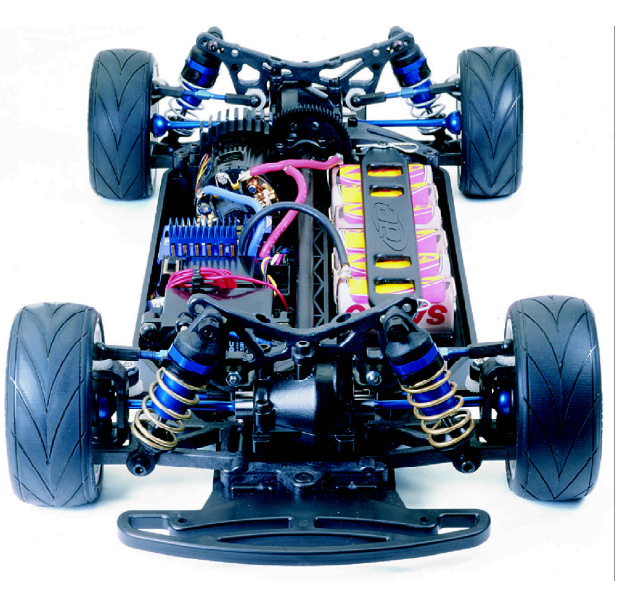
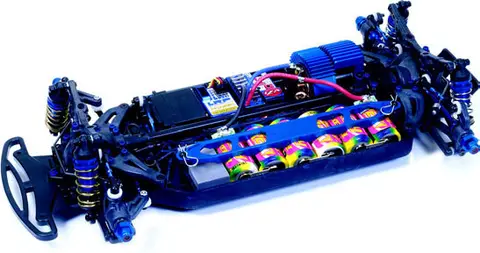
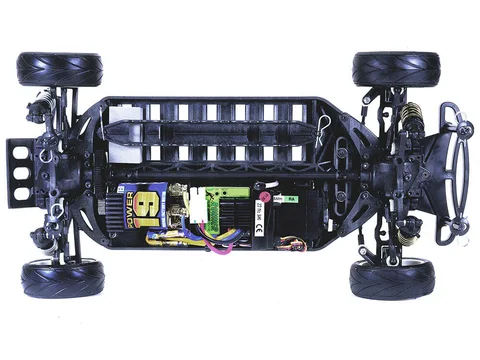
What the main chassis is made of and how it is built, as stated for this car. Braces, stiffeners and skid plates are not counted. - Composite is the makers' word for molded plastic, usually nylon with glass or other fibers: it flexes and shrugs off hits, and it is light and cheap to replace.
- Shocks
What the shocks are and how they are built, as the maker describes them. - Oil-filled shocks damp with silicone oil; friction shocks, found on some entry-level cars, damp with a sprung plunger and cannot be tuned with oil.
- Shock bore
The inside diameter of the shock body, where the piston moves through oil. - It is a shock measurement, separate from the motor pinion bore. Match the actual shock part when ordering pistons, seals or a replacement body.
- This is a nominal size inferred from the identified replacement components. It is not a measured internal diameter; confirm the exact body, piston and seal part numbers.
- Spring, front
The stock springs, in the maker's own wording: a color, a rate or a length. - A stiffer spring holds the car up and resists bottoming out; a softer one lets it squat and follow rough ground.
- Rates are not comparable across makers unless they state the same unit.
- Spring, rear
The same measure at the rear, which differs from the front on this car. - Shock oil
The oil in the shocks slows how fast the suspension moves. Thicker oil settles the car more slowly and resists bottoming out; thinner oil lets the wheels follow bumps. - Front and rear run the same oil on this car, so both ends respond alike. Changing one end at a time is the usual way to shift the balance.
- It is graded in wt here. A wt number is the oil maker's own grade and differs between brands, so match the brand, or use the oil maker's chart to convert.
|