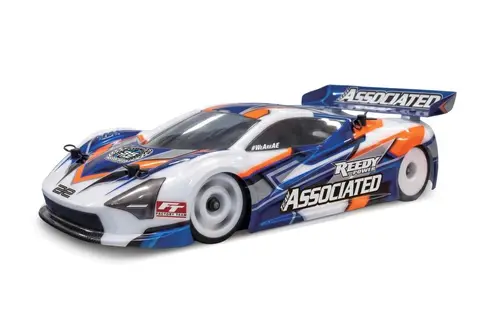
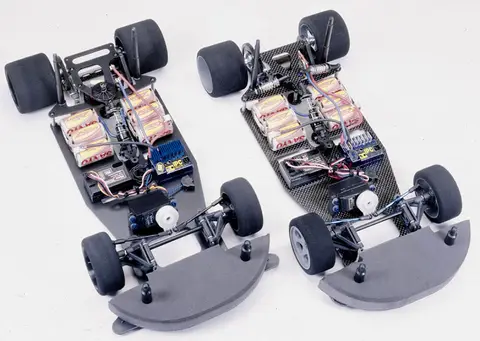
The RC10L returns to the broad, low pan car layout that made the original easy to recognize. Associated kept the centered motor and placed a LiPo along the centerline, with a revised servo mount. Those changes give the rerelease a distinct equipment layout within the RC10L family. Model reference (opens in a new tab)
Read moreShow less
The ball differential and foam tires are part of the kit’s construction, with electronics and the motor pinion chosen separately. The factory assembly manual gives the supplied spur and hardware, so it is the first reference for restoring this edition or choosing gearing for a particular motor. Technical reference (opens in a new tab)
The kind of vehicle the maker sells it as. It sets what the car is built to do and which cars it is fair to compare it with.
Touring cars are 4WD on-road cars for asphalt and carpet tracks, often raced in classes with fixed motor and battery rules.
Drive
Only one axle is driven, the rear on almost every 2WD RC car.
It is lighter and simpler, and it takes more throttle control out of corners.
Power
Sold without a motor, so you choose the motor, ESC and battery yourself.
Rows that depend on the motor say so.
Build
A kit you build yourself from parts.
Most kits come without motor, ESC, servo, radio and battery, and many without tires or a painted body.
The manual lists what to add.
Scale
The maker's nominal size compared with a full-size vehicle. It works more as a class label than a measurement.
A 1/10 monster truck is far bigger than a 1/10 touring car, so compare length and weight for real size.
This one is 381 mm long.
Part number
The maker's product number for this exact version.
A V2, a new color, or a kit instead of an RTR usually has a different number, and parts can differ between them.
Check it against your box or receipt before ordering parts.
Class
Touring
Drive
2WD
Power
Motor not included
Build
Kit
Scale
1/10
Part number
8002
Drivetrain
Pinion
The small gear on the motor shaft. Fewer teeth gear the car shorter: quicker acceleration, lower top speed and a cooler motor. More teeth do the opposite.
It depends on the motor you fit, so the maker does not list one.
Spur
The large gear the pinion drives. A bigger spur with the same pinion gears the car shorter.
Pinion and spur need matching pitch, or explicit manufacturer confirmation that the exact gears are compatible.
The Gearing parts table below shows this car's pitch and part numbers.
Transmission & axle
Every reduction after the spur, multiplied together: transmission, differentials and axle gears.
It is fixed by the design; the gearing you change is the pinion and spur.
Final drive
How many times the motor turns for one turn of the wheels. A higher number is shorter gearing: more acceleration and pulling power, less top speed.
On-road racers often compare gearing by rollout instead, because tire sizes differ between cars.
Differentials
The type of each differential, as the maker states it.
A gear or ball diff lets the wheels on one axle turn at different speeds in a corner; a spool or locked diff turns them together for straight-line drive and climbing, at the cost of steering.
Spur pitch
The tooth spacing of the fitted gear, stated as metric module or diametral pitch.
Pinion and spur need matching pitch or explicit manufacturer confirmation of compatibility for the exact parts. Mod 0.8 and 32P are different standards; a compatibility statement for particular gears does not apply to every gear. A missing pitch can be inferred from the other fitted gear; module and diametral pitch are not silently converted.
The outside diameter of the mounted tire, tread to tread. A taller tire covers more ground each turn, which gears the car taller.
Race tires wear down over a day, and a smaller tire gears the car shorter.
Tire diameter
Not published
Suspension
Shock oil, front
The oil in the shocks slows how fast the suspension moves. Thicker oil settles the car more slowly and resists bottoming out; thinner oil lets the wheels follow bumps.
At the front it mostly shapes the steering: thicker oil makes the car turn in more calmly and dive less under braking; thinner oil turns in sharper and keeps the front tires on the ground over bumps.
On smooth tracks racers change oil in small steps to fine-tune how the car rolls into a corner.
It is graded in wt here. A wt number is the oil maker's own grade and differs between brands, so match the brand, or use the oil maker's chart to convert.


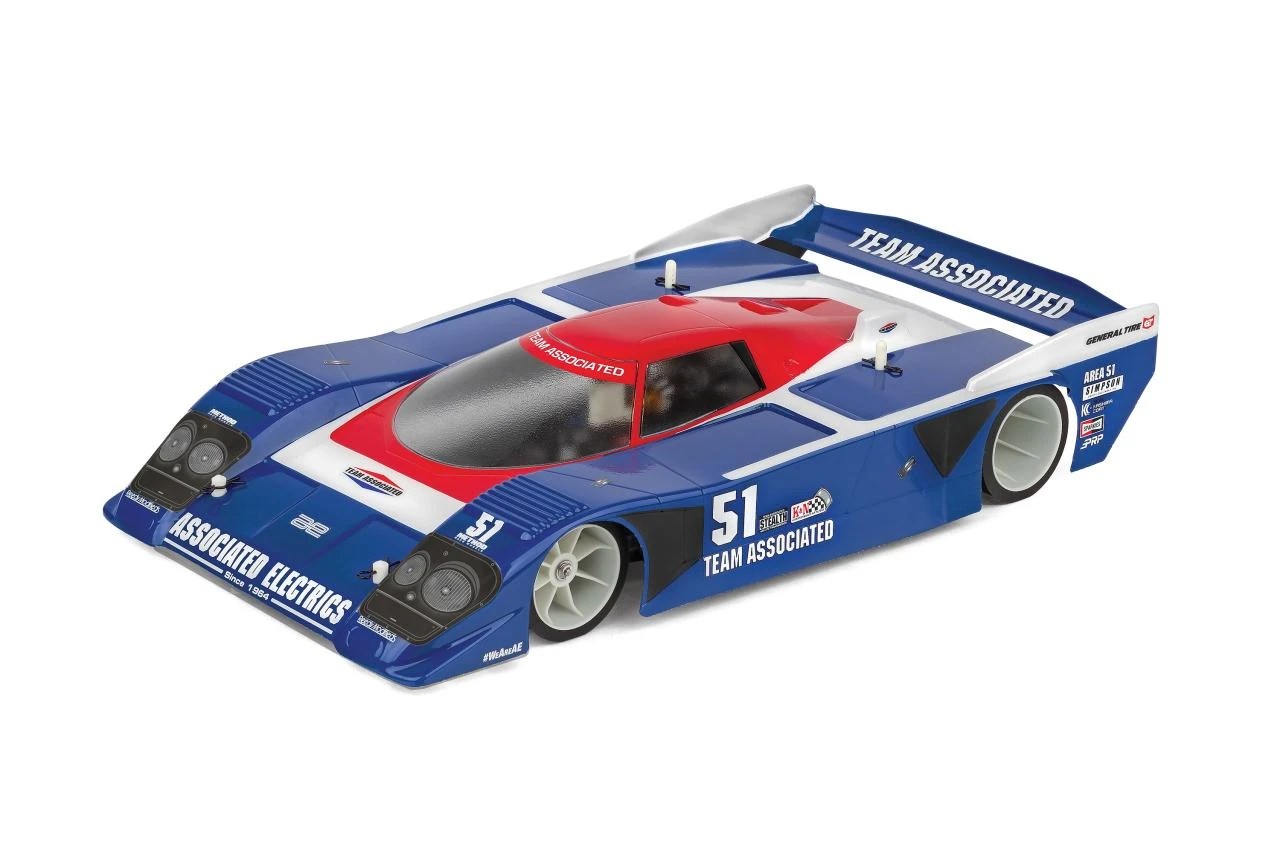
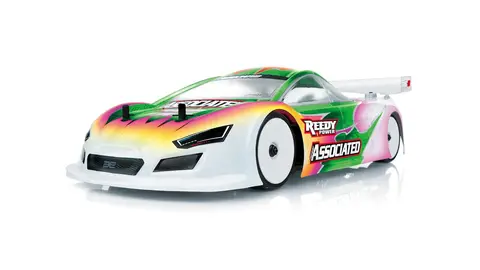 TC8 Graphite-Spec Team Kit1/10 · Touring
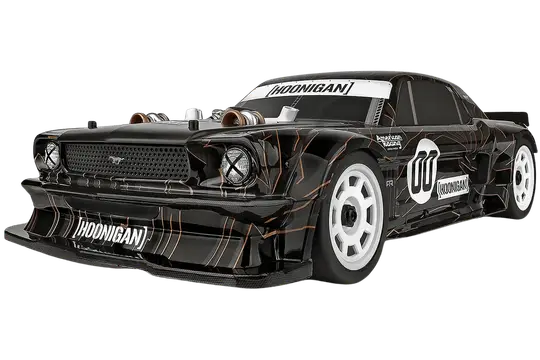 SR7 Hoonicorn RTR1/7 · Street and speed-run body
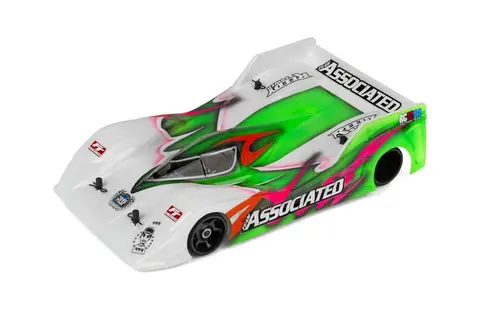 RC12R8 Factory Team Kit1/12 · Touring