The FSC18 Ford Bronco Brushless is a 1/18-scale four-wheel-drive trail and crawling model in FMS's range. It is supplied assembled with factory running equipment. Source details (opens in a new tab)
Read moreShow less
The body attachment is designed for access without conventional exposed body clips. Check the body seating and any lighting contacts when opening the chassis for battery changes or service. Source details (opens in a new tab)
This FSC18 Bronco is the brushless version of the desert-running package. Its complete RTR battery and charging equipment form a different ownership starting point from a chassis-only build. Keep the power-system edition visible when selecting electrical replacements. Source details (opens in a new tab)
The kind of vehicle the maker sells it as. It sets what the car is built to do and which cars it is fair to compare it with.
Crawlers are built for slow, controlled climbing over rocks: very low gearing, flexible suspension and locked axles.
The maker does not name a class for this one, so this is the site's judgment from its design.
Drive
All four wheels are driven. That gives more grip under power, especially on loose ground.
The cost is more parts to maintain.
A crawler needs every wheel pulling to climb.
Power
A brushless motor has no brushes to wear, so it makes more power and runs more efficiently than a brushed one.
It needs a brushless ESC.
Crawler brushless systems are usually sensored, so the motor turns smoothly from a standstill.
Build
Ready to run: built at the factory with the electronics installed.
Some come without a battery or charger; the maker's box contents say which.
Scale
The maker's nominal size compared with a full-size vehicle. It works more as a class label than a measurement.
A 1/10 monster truck is far bigger than a 1/10 touring car, so compare length and weight for real size.
This one is 330 mm long.
Part number
The maker's product number for this exact version.
A V2, a new color, or a kit instead of an RTR usually has a different number, and parts can differ between them.
Check it against your box or receipt before ordering parts.
Class
Crawlerour call
Drive
4WD
Power
Brushless
Build
Ready to run
Scale
1/18
Part number
FMS11871RTR24-BL
Drivetrain
Pinion
The small gear on the motor shaft. Fewer teeth gear the car shorter: quicker acceleration, lower top speed and a cooler motor. More teeth do the opposite.
On this car one tooth changes the gearing by about 7.7%.
Crawlers run small pinions for slow, precise wheel speed on climbs; a bigger one is quicker on the trail but harder to control on rocks.
Spur
The large gear the pinion drives. A bigger spur with the same pinion gears the car shorter.
Pinion and spur need matching pitch, or explicit manufacturer confirmation that the exact gears are compatible.
The Gearing parts table below shows this car's pitch and part numbers.
Transmission & axle
Every reduction after the spur, multiplied together: transmission, transfer case and axle gears.
That chain is why a crawler's figure is much higher than other classes'.
It is fixed by the design; the gearing you change is the pinion and spur.
Final drive
How many times the motor turns for one turn of the wheels. A higher number is shorter gearing: more acceleration and pulling power, less top speed.
Crawlers run far higher ratios than other classes, so the truck can creep and hold on a climb.
Pinion pitch
The tooth spacing of the fitted gear, stated as metric module or diametral pitch.
Pinion and spur need matching pitch or explicit manufacturer confirmation of compatibility for the exact parts. Mod 0.8 and 32P are different standards; a compatibility statement for particular gears does not apply to every gear. A missing pitch can be inferred from the other fitted gear; module and diametral pitch are not silently converted.
Spur pitch
The tooth spacing of the fitted gear, stated as metric module or diametral pitch.
Pinion and spur need matching pitch or explicit manufacturer confirmation of compatibility for the exact parts. Mod 0.8 and 32P are different standards; a compatibility statement for particular gears does not apply to every gear. A missing pitch can be inferred from the other fitted gear; module and diametral pitch are not silently converted.
The outside diameter of the mounted tire, tread to tread. A taller tire covers more ground each turn, which gears the car taller.
Crawler wheels are named by rim size, such as 1.9 or 2.2 inches; that is the wheel, not this tire diameter.
Wheel hex
The hex on the axle that the wheel locks onto and is driven by. A wheel must match the hex size to fit.
12 mm is the common size on 1/10 cars, so most 1/10 wheels fit; offset and width still vary.
The wheel nut is a separate size, so check its thread too before buying nuts.
Stock tire width
Stock tire width: A documented stock wheel, tire, or axle measurement. Stock dimensions alone do not establish the largest size that will clear the body and suspension.
Theoretical top speed is unavailable because complete final drive ratio is missing.
Enter the missing inputs in the calculator to work out a theoretical speed.
Advertised top speed
The top speed the maker claims.
Makers often quote it with optional gearing, a bigger battery or a fully charged pack, so read their wording before comparing it with another car's claim or with the calculated figure.
Theoretical top speed
Not published
Advertised top speed
27mphMaker's claim
Maker's claim
Size & weight
Length
Overall length as the maker states it, usually with the body fitted.
Useful for comparing real size, since scale labels are loose.
Width
Overall width as the maker states it, usually with the body fitted.
A wider car is more stable in corners and harder to roll over.
Height
Overall height as the maker states it, usually with the body fitted.
Useful when checking it fits a shelf, a bag or a car trunk.
Wheelbase
The distance between the front and rear axle centers. A longer wheelbase is steadier at speed and over bumps; a shorter one turns more tightly.
On a crawler it also decides how well the truck clears a ledge without the chassis catching.
FMS's specification table prints a 13T pinion on a 48T spur, both M0.6, and a 70 x 26mm tire in cells shared by the brushed and brushless versions, with a 2440 motor at 4500KV for the brushless version.
Read moreShow less
The ESC is a Hobbywing 16BL30RTR-G2, and Hobbywing sells its retail 16BL30 as a '2S-3S' ESC; FMS's table recommends 2-3S LiPo or 6-9 cell NiMH for this version, and the RTR ships with a 2S 2000mAh pack.
FMS prints no differential ratio and the manual is a scanned document with no readable ratio, so the ratio after the spur and the final drive are left blank.
The 27 mph figure is FMS's '45 km/h' maximum speed for the brushless version, with no pack stated; without a final drive it cannot be checked.
The two RTR liveries share the same factory tire dimensions.
The separate RS brushless package supplies electronics and requires a battery and charger.
How to read these figures
Stock is as the vehicle ships.
Not published means it exists but no source we could find prints it.
Source details (opens in a new tab)fmshobby.comPart pageSupports 11 specificationsUsed forMain specsGearingWeightSizeBattery fitWheel hexElectronicsWheels & tiresPowerSteering & radioIn the boxBackground
Set up the FSC18 Brushless with its own radio and separate WP 16BL30 RTR G2 controller instructions. The brushed version's combined control unit uses a different procedure. After changing the radio or receiver, start with neutral throttle trim and full throttle-channel travel, then use the ESC's SET-button sequence to learn neutral, full throttle and full brake. Release SET when the red light begins flashing; holding it too long enters programming instead of calibration.[1] FSC18 Ford Bronco Brushless factory setup manual (opens in a new tab)
Correct the steering setup before asking the receiver to compensate for it. The brushless receiver has a separate endpoint-learning procedure, entered with five short presses of its binding button, and a digital/analog servo-output setting. If a replacement servo vibrates, squeals or heats up at rest, check that output mode and the linkage rather than adding more travel. Receiver binding, steering endpoint learning and throttle calibration are separate jobs.[1] FSC18 Ford Bronco Brushless factory setup manual (opens in a new tab)
Read moreRead less about build and setup for FSC18 Ford Bronco Brushless
Keep the radio in the normal steering-and-throttle arrangement for this single-motor truck. The manual also describes mixed control for two drive motors and accessory channels; those pages do not mean the Bronco needs tank-style mixing. The ESC's throttle lead supplies receiver power through its BEC, so do not add another receiver supply without following the manual's isolation instructions. Check the wiring again after a servo or receiver change.[1] FSC18 Ford Bronco Brushless factory setup manual (opens in a new tab)
Common numbers cover selected core components, not every part. A shared family, manual or listing does not mean the parts fit both vehicles. Check the comparison and upgrade notes before ordering.
More connections & sourcesShow less
Model line
FSC18 Ford Bronco model line. FMS lists brushed and brushless Bronco variants together and documents differences in the differential, driveshafts, shocks and electronics. Source (opens in a new tab)


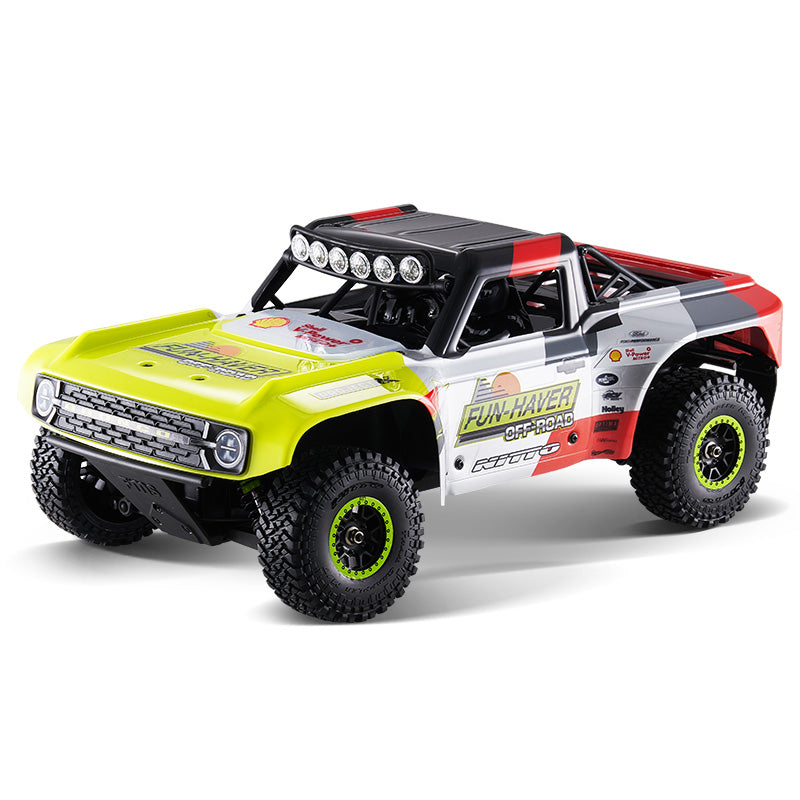
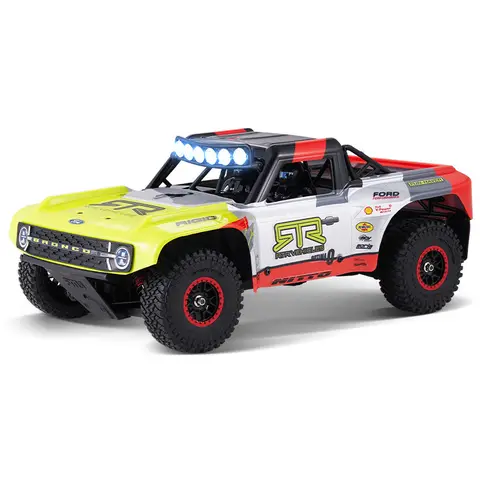 FMSFSC18 Ford Bronco Brushed
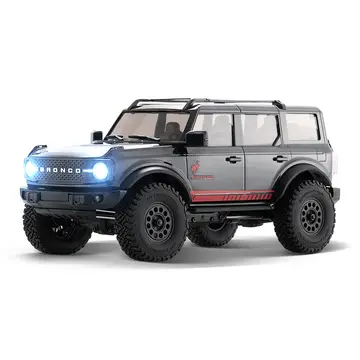 FCX18 II Ford Bronco 2021 Brushed1/18 · Crawler
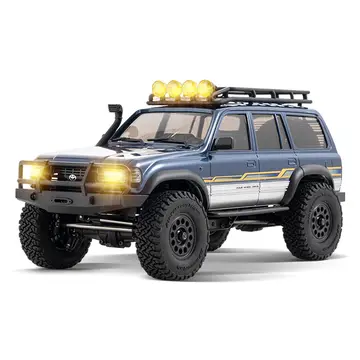 FCX18 II Toyota Land Cruiser LC80 Brushed1/18 · Crawler
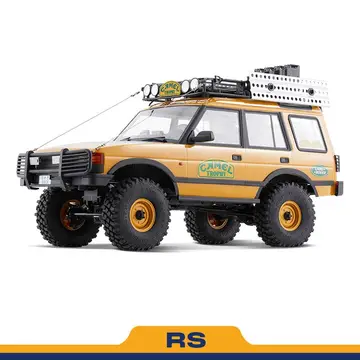 FCX10 Land Rover Discovery Camel Trophy RS1/10 · Crawler
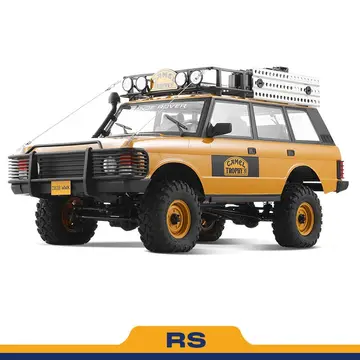 FCX10 Land Rover Range Rover Camel Trophy RS1/10 · FMS11044RSYL-SP
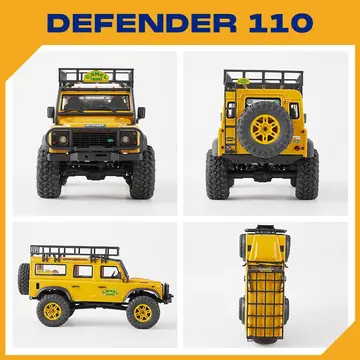 FCX24M Land Rover Defender 110 Camel Trophy Edition RTR1/24 · FMS12482RTRYL
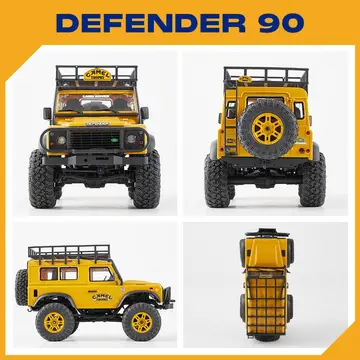 FCX24M Land Rover Defender 90 Camel Trophy Edition RTR1/24 · FMS12491RTRYL
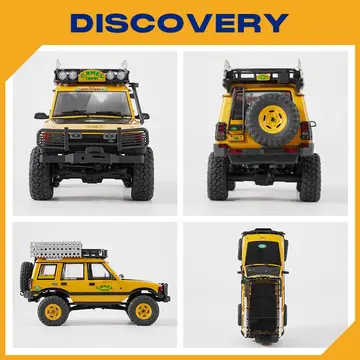 FCX24M Land Rover Discovery Camel Trophy Edition RTR1/24 · FMS12483RTRYL