The FSC18 Ford Bronco Brushed is a 1/18-scale four-wheel-drive trail and crawling model in FMS's range. It is supplied assembled with factory running equipment. Source details (opens in a new tab)
Read moreShow less
The body attachment is designed for access without conventional exposed body clips. Check the body seating and any lighting contacts when opening the chassis for battery changes or service. Source details (opens in a new tab)
This FSC18 Bronco is the brushed version of the desert-running package. Its complete RTR battery and charging equipment form a different ownership starting point from a chassis-only build. Keep the power-system edition visible when selecting electrical replacements. Source details (opens in a new tab)
The kind of vehicle the maker sells it as. It sets what the car is built to do and which cars it is fair to compare it with.
Crawlers are built for slow, controlled climbing over rocks: very low gearing, flexible suspension and locked axles.
The maker does not name a class for this one, so this is the site's judgment from its design.
Drive
All four wheels are driven. That gives more grip under power, especially on loose ground.
The cost is more parts to maintain.
A crawler needs every wheel pulling to climb.
Power
A brushed motor carries current through carbon brushes that rub on the commutator.
It is cheaper and smooth at low speed.
The brushes wear and the motor loses power over time.
That low-speed smoothness is why so many crawlers use one.
Build
Ready to run: built at the factory with the electronics installed.
Some come without a battery or charger; the maker's box contents say which.
Scale
The maker's nominal size compared with a full-size vehicle. It works more as a class label than a measurement.
A 1/10 monster truck is far bigger than a 1/10 touring car, so compare length and weight for real size.
This one is 330 mm long.
Part number
The maker's product number for this exact version.
A V2, a new color, or a kit instead of an RTR usually has a different number, and parts can differ between them.
Check it against your box or receipt before ordering parts.
Class
Crawlerour call
Drive
4WD
Power
Brushed
Build
Ready to run
Scale
1/18
Part number
FMS11871RTR25
Drivetrain
Pinion
The small gear on the motor shaft. Fewer teeth gear the car shorter: quicker acceleration, lower top speed and a cooler motor. More teeth do the opposite.
On this car one tooth changes the gearing by about 7.7%.
Crawlers run small pinions for slow, precise wheel speed on climbs; a bigger one is quicker on the trail but harder to control on rocks.
Spur
The large gear the pinion drives. A bigger spur with the same pinion gears the car shorter.
Pinion and spur need matching pitch, or explicit manufacturer confirmation that the exact gears are compatible.
The Gearing parts table below shows this car's pitch and part numbers.
Transmission & axle
Every reduction after the spur, multiplied together: transmission, transfer case and axle gears.
That chain is why a crawler's figure is much higher than other classes'.
It is fixed by the design; the gearing you change is the pinion and spur.
Final drive
How many times the motor turns for one turn of the wheels. A higher number is shorter gearing: more acceleration and pulling power, less top speed.
Crawlers run far higher ratios than other classes, so the truck can creep and hold on a climb.
Pinion pitch
The tooth spacing of the fitted gear, stated as metric module or diametral pitch.
Pinion and spur need matching pitch or explicit manufacturer confirmation of compatibility for the exact parts. Mod 0.8 and 32P are different standards; a compatibility statement for particular gears does not apply to every gear. A missing pitch can be inferred from the other fitted gear; module and diametral pitch are not silently converted.
Spur pitch
The tooth spacing of the fitted gear, stated as metric module or diametral pitch.
Pinion and spur need matching pitch or explicit manufacturer confirmation of compatibility for the exact parts. Mod 0.8 and 32P are different standards; a compatibility statement for particular gears does not apply to every gear. A missing pitch can be inferred from the other fitted gear; module and diametral pitch are not silently converted.
The outside diameter of the mounted tire, tread to tread. A taller tire covers more ground each turn, which gears the car taller.
Crawler wheels are named by rim size, such as 1.9 or 2.2 inches; that is the wheel, not this tire diameter.
Wheel hex
The hex on the axle that the wheel locks onto and is driven by. A wheel must match the hex size to fit.
12 mm is the common size on 1/10 cars, so most 1/10 wheels fit; offset and width still vary.
The wheel nut is a separate size, so check its thread too before buying nuts.
Stock tire width
Stock tire width: A documented stock wheel, tire, or axle measurement. Stock dimensions alone do not establish the largest size that will clear the body and suspension.
Theoretical top speed is unavailable because motor KV and complete final drive ratio are missing.
Enter the missing inputs in the calculator to work out a theoretical speed.
Advertised top speed
The top speed the maker claims.
Makers often quote it with optional gearing, a bigger battery or a fully charged pack, so read their wording before comparing it with another car's claim or with the calculated figure.
Theoretical top speed
Not published
Advertised top speed
21mphMaker's claim
Maker's claim
Size & weight
Length
Overall length as the maker states it, usually with the body fitted.
Useful for comparing real size, since scale labels are loose.
Width
Overall width as the maker states it, usually with the body fitted.
A wider car is more stable in corners and harder to roll over.
Height
Overall height as the maker states it, usually with the body fitted.
Useful when checking it fits a shelf, a bag or a car trunk.
Wheelbase
The distance between the front and rear axle centers. A longer wheelbase is steadier at speed and over bumps; a shorter one turns more tightly.
On a crawler it also decides how well the truck clears a ledge without the chassis catching.
FMS's specification table prints a 13T pinion on a 48T spur, both M0.6, and a 70 x 26mm tire in cells shared by the brushed and brushless versions, with a 380-size brushed motor for the brushed version.
Read moreShow less
FMS prints no differential ratio and the manual is a scanned document with no readable ratio, so the ratio after the spur and the final drive are left blank.
The 21 mph figure is FMS's '35 km/h' maximum speed for the brushed version.
This RTR is sold in two liveries with the same published tire dimensions.
The brushed receiver and speed control's parameter table in the manual (PDF p. 14) rates it at 7.4V, a 2S LiPo.
The supplied brushed motor has no sourced Kv value; Kv remains unknown unless an exact motor mapping is supported.
How to read these figures
Stock is as the vehicle ships.
Not published means it exists but no source we could find prints it.
Instruction manual (FMS PDF) (opens in a new tab)cdn-files.myshopline.comPDFSupports 7 specificationsparts list Brushed PDF p. 15-16; brushless PDF p. 43-45Used forMain specsWeightSizeBattery fitWheel hexFluidsElectronicsBackground
Parts and electronics
4
Source details (opens in a new tab)fmshobby.comPart pageSupports 11 specificationsUsed forMain specsGearingWeightSizeBattery fitWheel hexElectronicsWheels & tiresPowerSteering & radioIn the boxBackground
Use the brushed FSC18 Bronco's throttle-limit switch while learning the truck, then restore full response when the driving space permits. The manual describes a 60% limit in that switch position. Steering trim centers the wheels and steering rate adjusts the available angle; those are separate controls. Start with the brushed section of the shared manual, because the brushless transmitter instructions begin later and describe different equipment.[1] FSC18 Ford Bronco Brushed factory setup manual (opens in a new tab)
An apparent reverse delay can be the selected running mode. In forward/reverse/brake mode, the first reverse command brakes, and the trigger must return to neutral before the next command produces reverse. The brushed radio also uses different indicator patterns for binding and low transmitter battery. Check that pattern and the brake sequence before replacing the combined receiver/controller for an intermittent-control complaint.[1] FSC18 Ford Bronco Brushed factory setup manual (opens in a new tab)
Common numbers cover selected core components, not every part. A shared family, manual or listing does not mean the parts fit both vehicles. Check the comparison and upgrade notes before ordering.
More connections & sourcesShow less
Model line
FSC18 Ford Bronco model line. FMS lists brushed and brushless Bronco variants together and documents differences in the differential, driveshafts, shocks and electronics. Source (opens in a new tab)


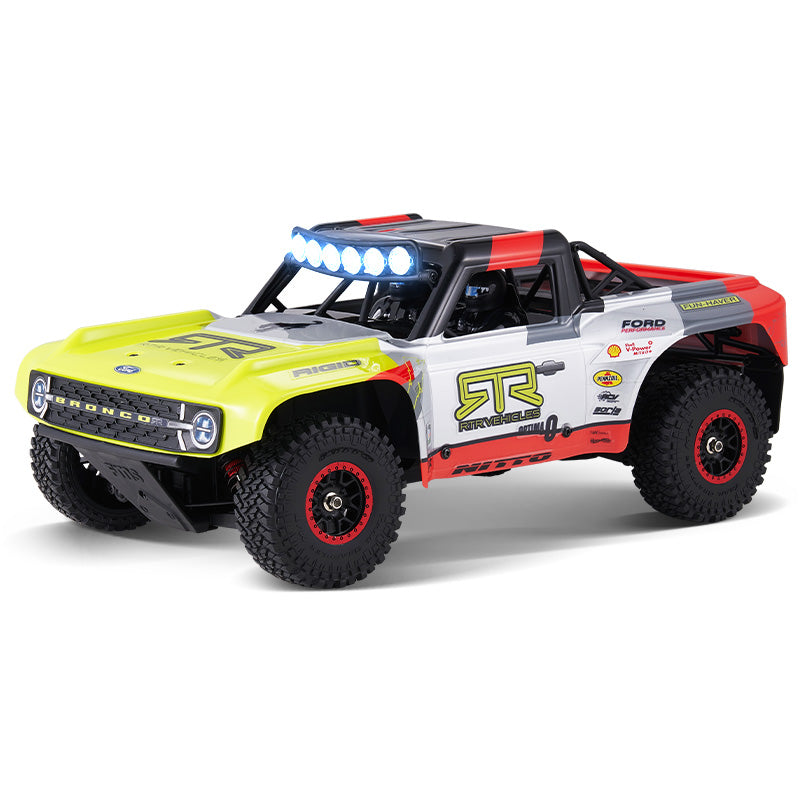
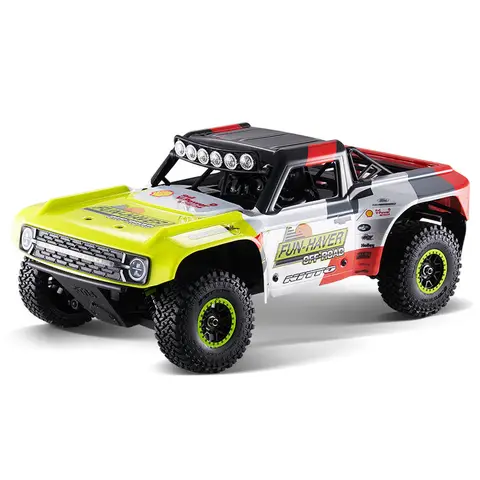 FMSFSC18 Ford Bronco Brushless
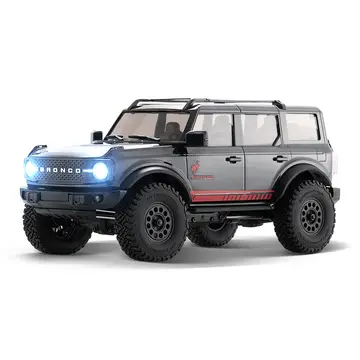 FCX18 II Ford Bronco 2021 Brushed1/18 · Crawler
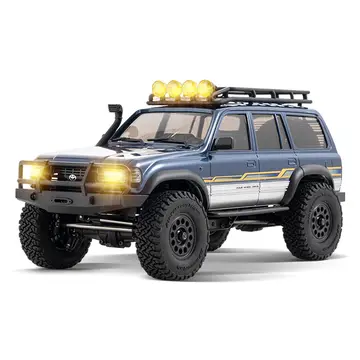 FCX18 II Toyota Land Cruiser LC80 Brushed1/18 · Crawler
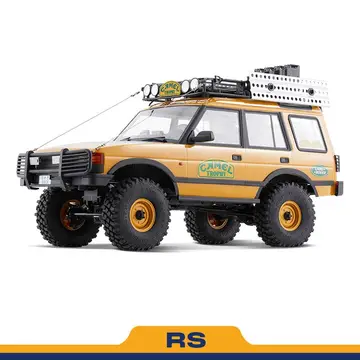 FCX10 Land Rover Discovery Camel Trophy RS1/10 · Crawler
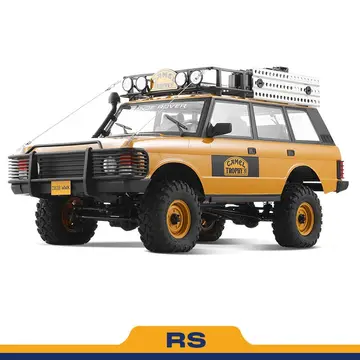 FCX10 Land Rover Range Rover Camel Trophy RS1/10 · FMS11044RSYL-SP
 FCX24M Land Rover Defender 110 Camel Trophy Edition RTR1/24 · FMS12482RTRYL
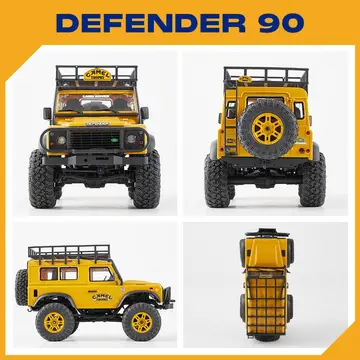 FCX24M Land Rover Defender 90 Camel Trophy Edition RTR1/24 · FMS12491RTRYL
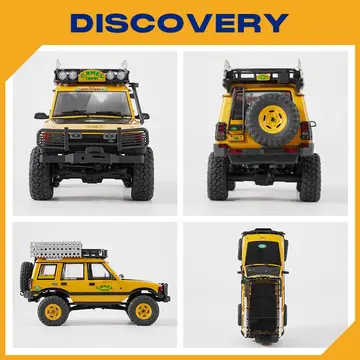 FCX24M Land Rover Discovery Camel Trophy Edition RTR1/24 · FMS12483RTRYL