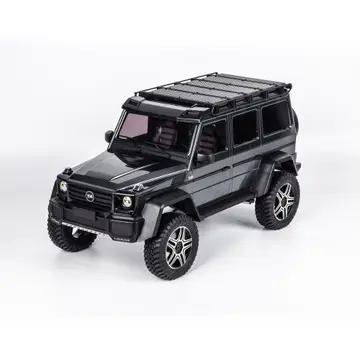
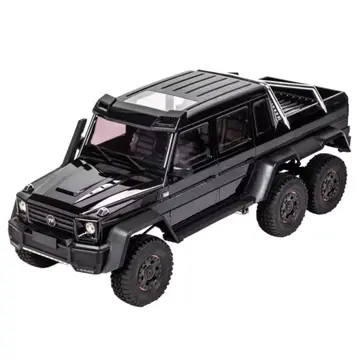
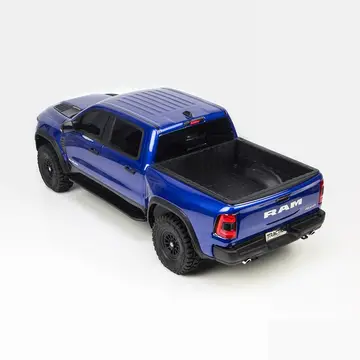
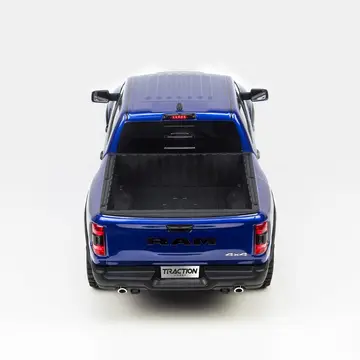
The Ford Raptor F150 IFS Brushless is a 1/8-scale trail vehicle in Traction Hobby's range.1 Its equipment includes Ford-licensed pickup body; independent front suspension and a rear solid axle; remotely controlled differential locks; selectable front, rear and all-wheel drive; a two-speed transmission.1 The body and suspension package give this version its own place within the range.1
Read moreShow less
Check the edition before choosing service parts, since the model family also includes different suspension layouts, body packages and electronics.1
The kind of vehicle the maker sells it as. It sets what the car is built to do and which cars it is fair to compare it with.
Crawlers are built for slow, controlled climbing over rocks: very low gearing, flexible suspension and locked axles.
Drive
All four wheels are driven. That gives more grip under power, especially on loose ground.
The cost is more parts to maintain.
A crawler needs every wheel pulling to climb.
Power
A brushless motor has no brushes to wear, so it makes more power and runs more efficiently than a brushed one.
It needs a brushless ESC.
Crawler brushless systems are usually sensored, so the motor turns smoothly from a standstill.
Build
Ready to run: built at the factory with the electronics installed.
Some come without a battery or charger; the maker's box contents say which.
Scale
The maker's nominal size compared with a full-size vehicle. It works more as a class label than a measurement.
A 1/10 monster truck is far bigger than a 1/10 touring car, so compare length and weight for real size.
This one is 695 mm long.
Part number
The maker's product number for this exact version.
A V2, a new color, or a kit instead of an RTR usually has a different number, and parts can differ between them.
Check it against your box or receipt before ordering parts.
Class
Crawler
Drive
4WD
Power
Brushless
Build
Ready to run
Scale
1/8
Part number
F150BRS
Drivetrain
Pinion
The small gear on the motor shaft. Fewer teeth gear the car shorter: quicker acceleration, lower top speed and a cooler motor. More teeth do the opposite.
On this car one tooth changes the gearing by about 7.1%.
Crawlers run small pinions for slow, precise wheel speed on climbs; a bigger one is quicker on the trail but harder to control on rocks.
Spur
The large gear the pinion drives. A bigger spur with the same pinion gears the car shorter.
Pinion and spur must have the same pitch, or tooth size, to mesh.
Transmission & axle
Every reduction after the spur, multiplied together: transmission, transfer case and axle gears.
That chain is why a crawler's figure is much higher than other classes'.
It is fixed by the design; the gearing you change is the pinion and spur.
Final drive
How many times the motor turns for one turn of the wheels. A higher number is shorter gearing: more acceleration and pulling power, less top speed.
Crawlers run far higher ratios than other classes, so the truck can creep and hold on a climb.
The oil in the shocks slows how fast the suspension moves. Thicker oil settles the car more slowly and resists bottoming out; thinner oil lets the wheels follow bumps.
Front and rear run the same oil on this car, so both ends respond alike. Changing one end at a time is the usual way to shift the balance.
It is graded in cSt (centistokes), a measure of thickness that is the same across brands.
22 collected part numbers. Collected . Unmarked parts are recorded listings, without a claim about factory installation; optional and upgrade listings are tagged. Key assemblies include recorded gear and shock identifiers. Open a part for its listing sources.
About these specs
The complete reduction through the two-speed transmission, transfer case and axles is not specified. No calculated top-speed figure is supplied.


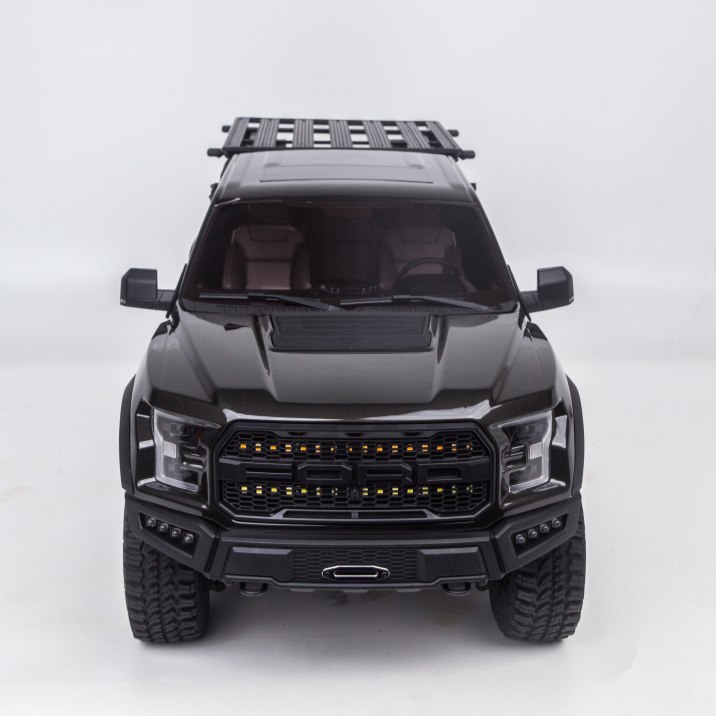
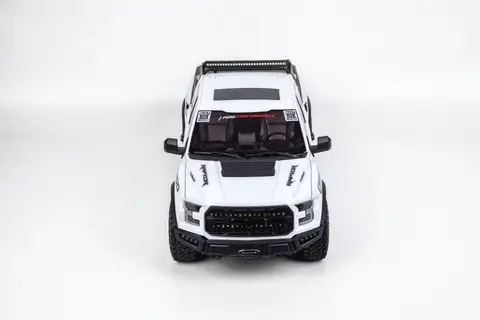 Traction HobbyFord Raptor F150 IFS Brushed
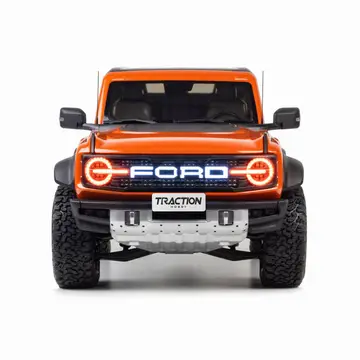 Ford Bronco Raptor BRD1/8 · Crawler
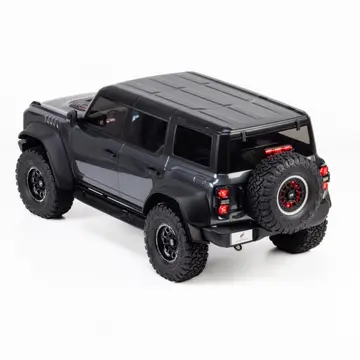 Ford Bronco Raptor BRS Brushless1/8 · Crawler