The X26 FWD brings Serpent’s Medius touring platform into front-wheel-drive racing. It uses a carbon chassis and develops its own front-drive layout. The car was developed with Dominic Greiner around the demands of turning and accelerating with the same pair of driven tires. Model reference (opens in a new tab)
Read moreShow less
That focus gives the FWD version a different setup brief from the all-wheel-drive X26. Its identity starts with the front-drive kit number, especially when selecting transmission parts or reading setup notes. Motor and gearing choices belong to the class and track where the car will run. Technical reference (opens in a new tab)
The kind of vehicle the maker sells it as. It sets what the car is built to do and which cars it is fair to compare it with.
Touring cars are 4WD on-road cars for asphalt and carpet tracks, often raced in classes with fixed motor and battery rules.
Drive
Only one axle is driven, the rear on almost every 2WD RC car.
It is lighter and simpler, and it takes more throttle control out of corners.
Power
Sold without a motor, so you choose the motor, ESC and battery yourself.
Rows that depend on the motor say so.
Build
A kit you build yourself from parts.
Most kits come without motor, ESC, servo, radio and battery, and many without tires or a painted body.
The manual lists what to add.
Scale
The maker's nominal size compared with a full-size vehicle. It works more as a class label than a measurement.
A 1/10 monster truck is far bigger than a 1/10 touring car, so compare length and weight for real size.
Part number
The maker's product number for this exact version.
A V2, a new color, or a kit instead of an RTR usually has a different number, and parts can differ between them.
Check it against your box or receipt before ordering parts.
Class
Touring
Drive
2WD
Power
Motor not included
Build
Kit
Scale
1/10
Part number
SER400044
Drivetrain
Pinion
The small gear on the motor shaft. Fewer teeth gear the car shorter: quicker acceleration, lower top speed and a cooler motor. More teeth do the opposite.
It depends on the motor you fit, so the maker does not list one.
Spur
The large gear the pinion drives. A bigger spur with the same pinion gears the car shorter.
Pinion and spur need matching pitch, or explicit manufacturer confirmation that the exact gears are compatible.
The Gearing parts table below shows this car's pitch and part numbers.
Transmission & axle
Every reduction after the spur, multiplied together: transmission, differentials and axle gears.
It is fixed by the design; the gearing you change is the pinion and spur.
Final drive
How many times the motor turns for one turn of the wheels. A higher number is shorter gearing: more acceleration and pulling power, less top speed.
On-road racers often compare gearing by rollout instead, because tire sizes differ between cars.
Spur pitch
The tooth spacing of the fitted gear, stated as metric module or diametral pitch.
Pinion and spur need matching pitch or explicit manufacturer confirmation of compatibility for the exact parts. Mod 0.8 and 32P are different standards; a compatibility statement for particular gears does not apply to every gear. A missing pitch can be inferred from the other fitted gear; module and diametral pitch are not silently converted.


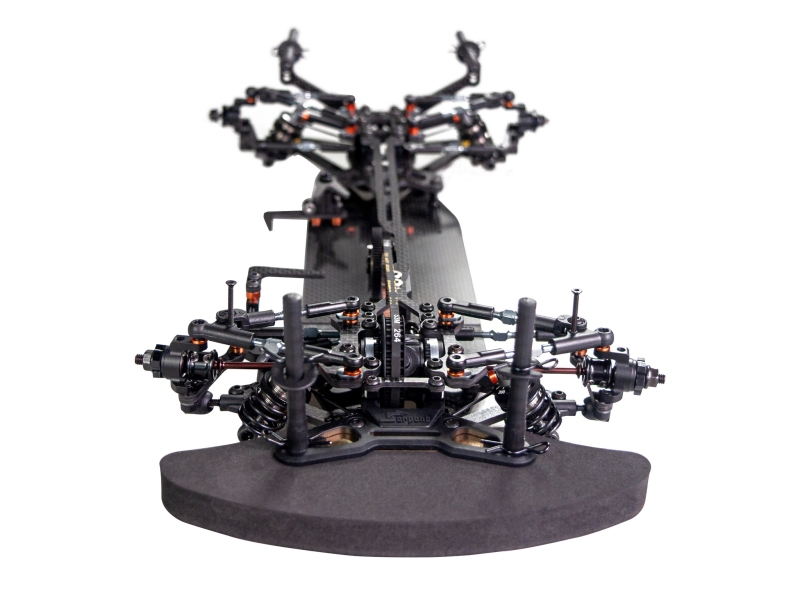
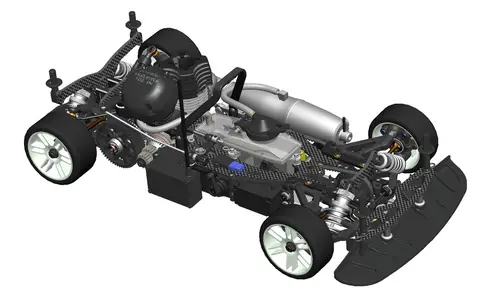 Natrix 750 EVO 4wd 1/10 GP1/10 · Touring
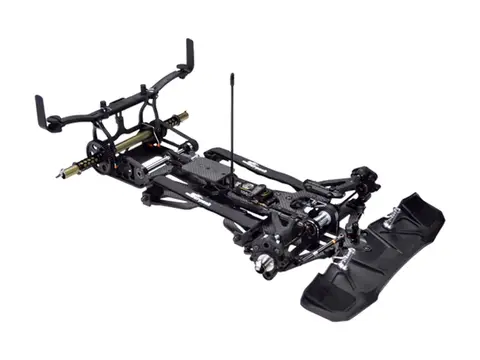 Taipan 988e Pan Car 1/8 EP1/8 · Touring
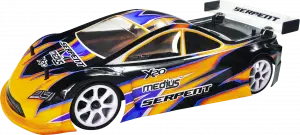 Medius X20 '21 aluminium 1/10 EP1/10 · Touring
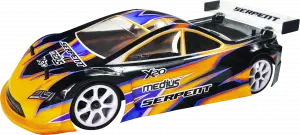 Medius X20 '21 carbon 1/10 EP1/10 · SER400037
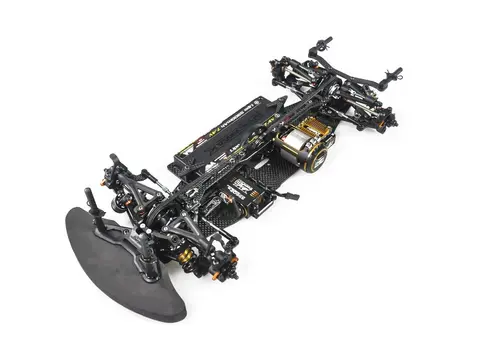 Medius X20 '24 aluminium 1/10 EP1/10 · SER400047
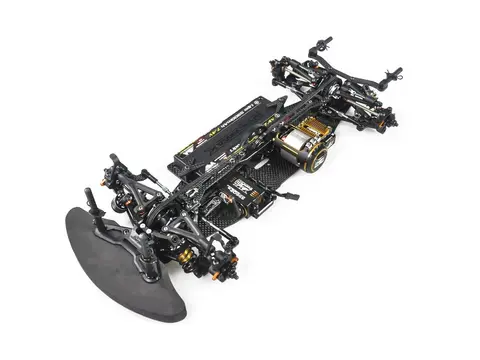 Medius X20 '24 carbon 1/10 EP1/10 · SER400046
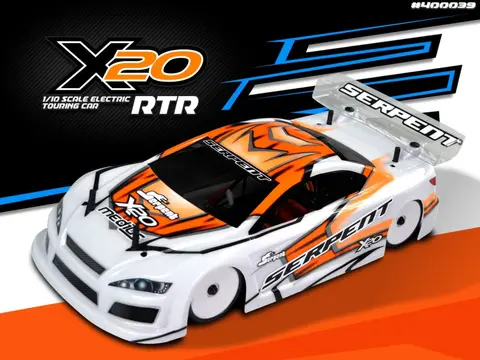 Medius X20 RTR 1/10 EP1/10 · SER400039-O