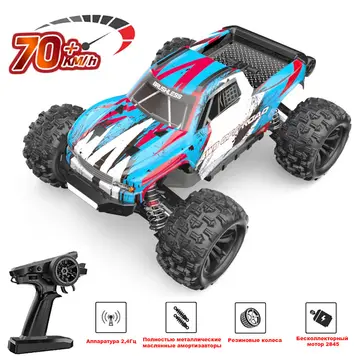
- Shocks
What the shocks are and how they are built, as the maker describes them. - Oil-filled shocks damp with silicone oil; friction shocks, found on some entry-level cars, damp with a sprung plunger and cannot be tuned with oil.
- Threaded bodies set ride height with a collar you turn, rather than clips.
- Shock length, front
The stated length of the complete shock assembly. Sources may use mounting-eye centers or a nominal assembly length. - Compare fully extended mounting-eye spacing, compressed length and mounting hardware before ordering. A longer shock changes ride height and travel, and can bind at full droop or bottom out.
- This approximate length comes from a replacement listed for the identified OEM shock set. Check the fitted shocks; their original dimensions may differ.
- Shock length, rear
The same measure at the rear, which differs from the front on this car. - Longer rear shocks are common: they give the rear more travel for landings and put power down over rough ground.
- Front upper shock bolt
Front upper shock bolt: A documented shock mounting interface at the named end and eye. A ball stud or standoff is distinct from a through-bolt. Match the mounting type, thread and eye dimensions when choosing a replacement shock. - Front lower shock bolt
Front lower shock bolt: A documented shock mounting interface at the named end and eye. A ball stud or standoff is distinct from a through-bolt. Match the mounting type, thread and eye dimensions when choosing a replacement shock. - Rear upper shock bolt
Rear upper shock bolt: A documented shock mounting interface at the named end and eye. A ball stud or standoff is distinct from a through-bolt. Match the mounting type, thread and eye dimensions when choosing a replacement shock. - Rear lower shock bolt
Rear lower shock bolt: A documented shock mounting interface at the named end and eye. A ball stud or standoff is distinct from a through-bolt. Match the mounting type, thread and eye dimensions when choosing a replacement shock. - Shock oil
The oil in the shocks slows how fast the suspension moves. Thicker oil settles the car more slowly and resists bottoming out; thinner oil lets the wheels follow bumps. - Front and rear run the same oil on this car, so both ends respond alike. Changing one end at a time is the usual way to shift the balance.
- It is graded in cSt (centistokes), a measure of thickness that means the same across brands. K means thousands, so 2K cSt is 2,000 cSt.
|